
What is Brutalism?
Brutalism is a style that emerged in Europe following WWII. Buildings of the style were defined by raw materials, mainly concrete. They became the style of choice for architects building public housing and government buildings. The style’s popularity peaked in the 1960s and 1970s before falling out of favor in the late-1970s.
Defining Characteristics
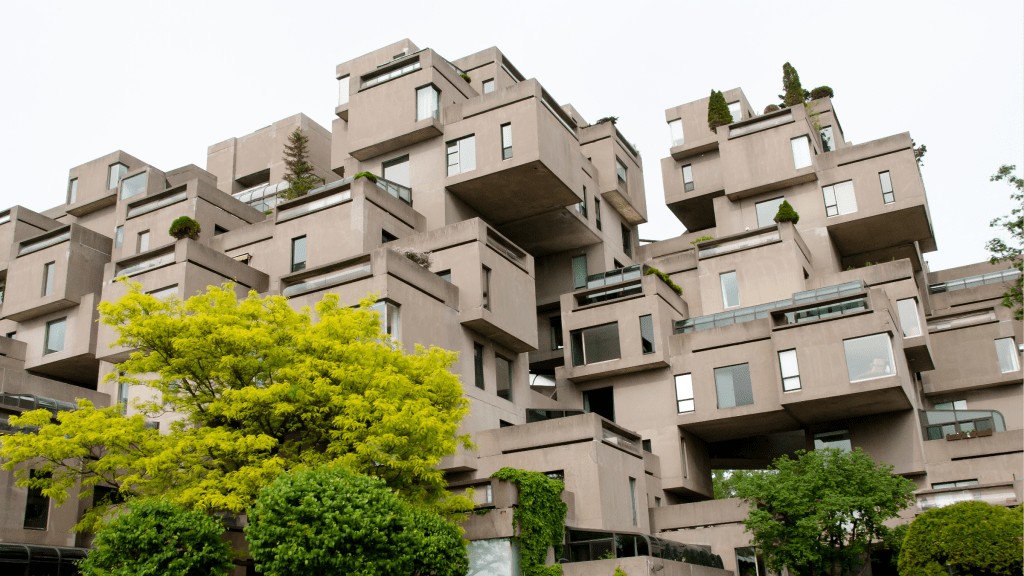
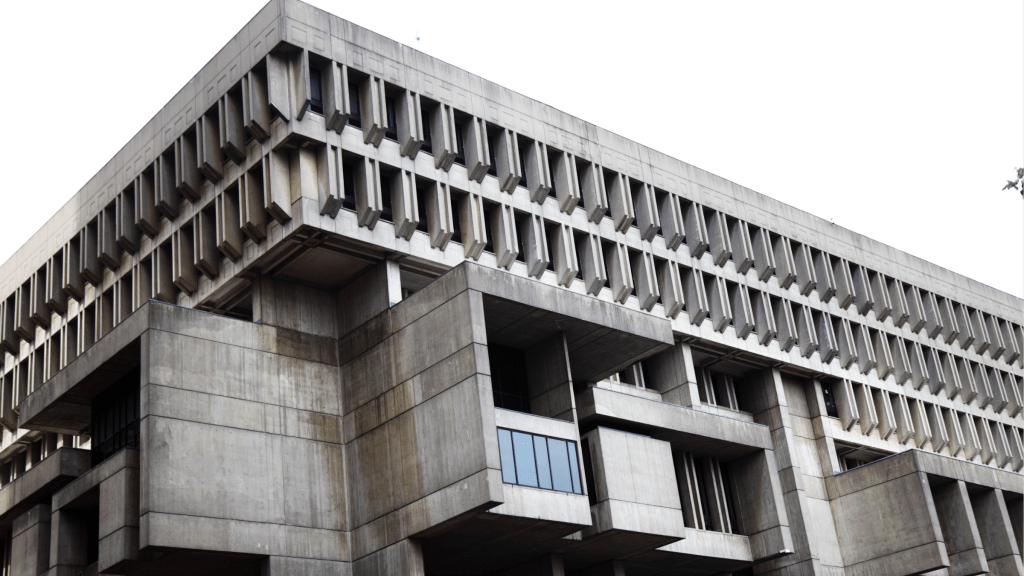
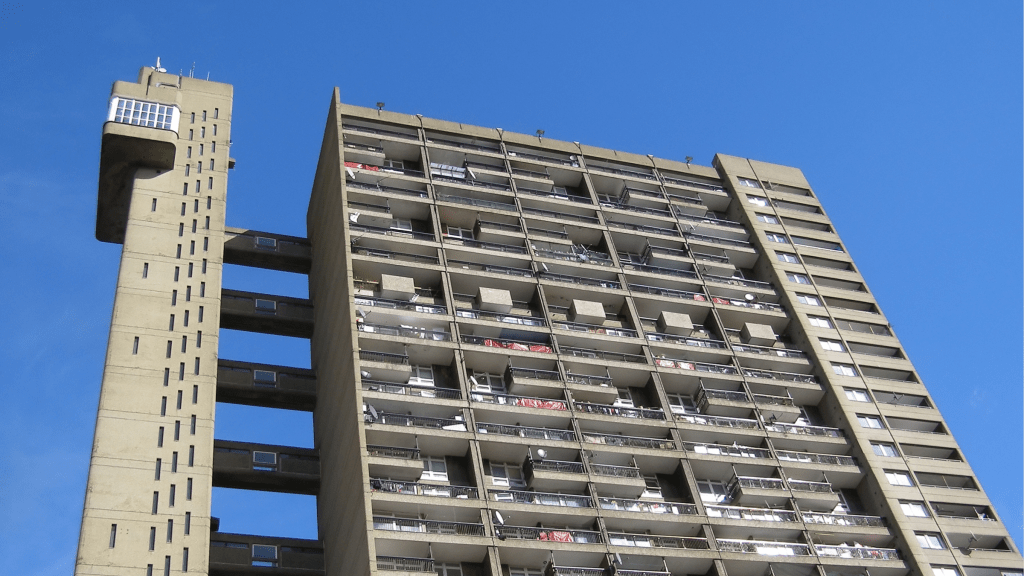
- Exposed concrete surfaces (béton brut)
- Monolithic, fortress-like forms
- Repetitive geometric modules
- Minimal ornamentation
- Deep-set windows and shadows
- Sculptural mass and structural expression
Origins & History
Although many associate the name “Brutalism” with béton brut–Le Corbusier’s term for raw concrete–its true origins are nuanced. Architectural historian Anthony Vidler points out that the term actually traces back to Sweden in the late 1940s, where architect Hans Asplund first used it to describe a house he designed with raw, industrial materials. British architects in the postwar avant-garde later adopted and redefined the word, using to to label a bold new architectural movement grounded in material honesty, functional clarity, and social ambition.
Its peak stretched into the 1970s, especially in Europe and North America, becoming the architectural choice for civic buildings, public housing, and universities. But its popularity would later wane, branded as oppressive, impersonal, and cold–especially in urban renewal efforts gone wrong.
Notable Architects
Le Corbusier
His Unité d’Habitation set the blueprint for Brutalism’s mass housing ideals.
Alison & Peter Smithson
British pioneers who gave the style its name and ethos. Their Hunstanton School and Robin Hood Gardens pushed the boundaries of post-war social architecture.
Paul Rudolph
An American voice in Brutalism, known for dramatic compositions like Yale Art & Architecture Building, marrying raw concrete with theatrical form.
Important Works

Legacy & Relevance
Brutalism may have fallen from grace in the 1980s, but its story isn’t entirely over. Once maligned as dystopian, it’s now celebrated as raw, real, and deeply expressive. Instagram accounts, coffee table books, and architectural preservationists have sparked a revival, giving new meaning to these hulking monuments of postwar hope and hardship.
Watch Our Video
Further Resources
- Concrete Concept by Christopher Beanland
- “Learning to Love Brutalism” by Anthony Vidler
- “The New Brutalism” by Reyner Banham
 All Things Architecture