
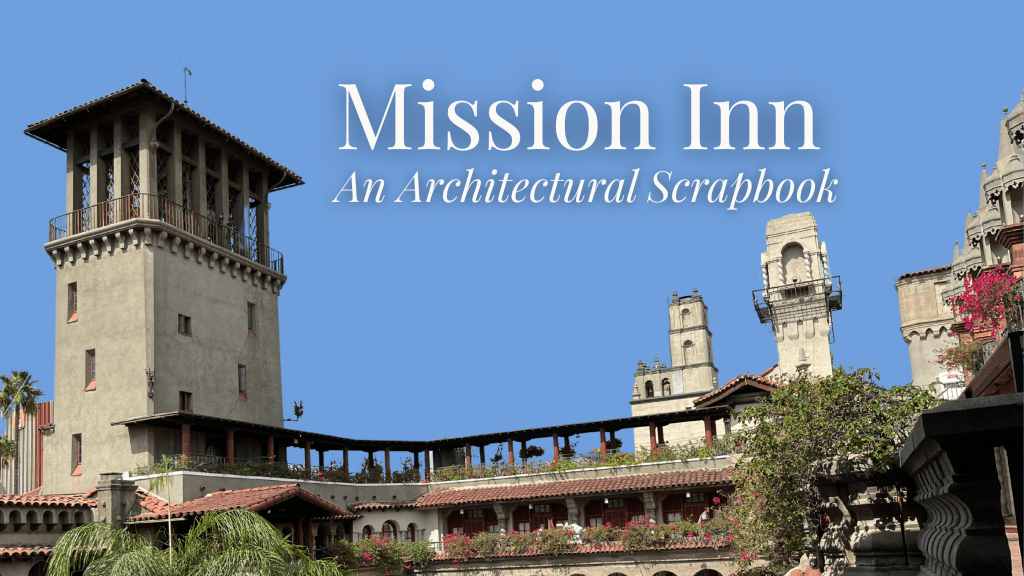
Sixty miles east of Los Angeles lies Riverside, California–a city quite literally built on citrus. Following the introduction of orange trees in the late 1800s, Riverside quickly grew into one of the world’s largest producers of citrus fruits. For a time, the region was known as the wealthiest per capital in the nation, all thanks to the orange.
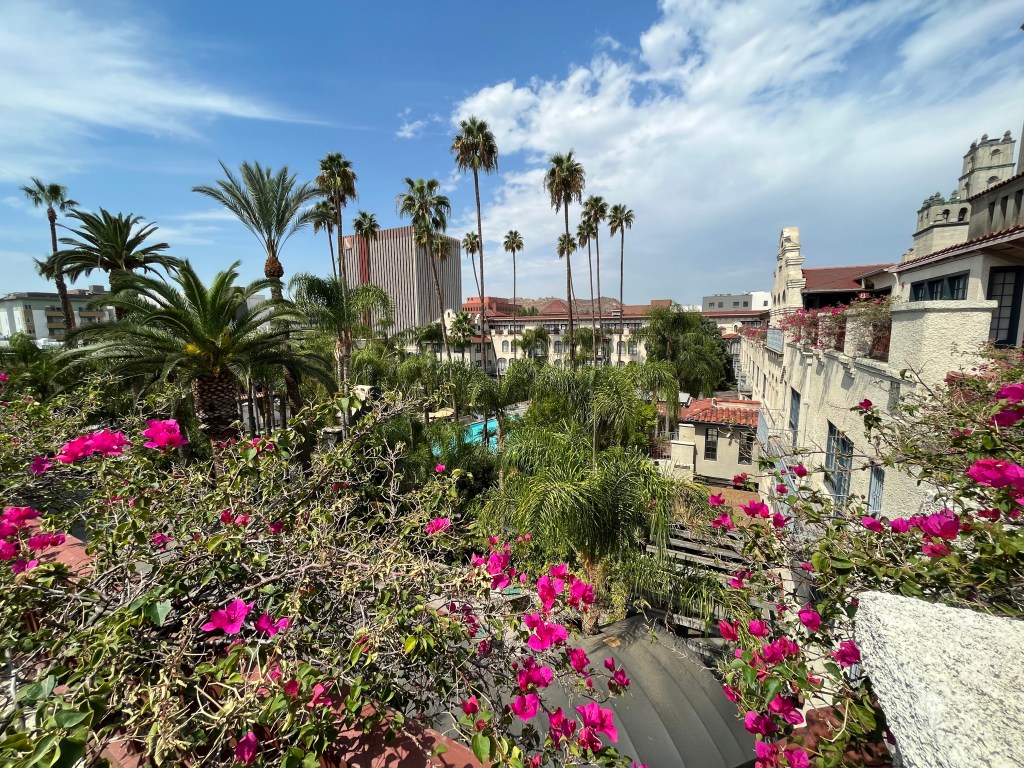
Today, that golden age has faded. The once-endless rows of orange groves have given way to warehouses, highways, and the creeping sprawl typical of Southern California. But in the heart of its downtown, a remarkable relic from that golden era still stands and thrives–the Mission Inn Hotel & Spa.
It rises above the city like something out of an architectural dream–a fantastical blend of towers, domes, cupolas, buttresses, and arcades. Part medieval Spanish monastery, part Moorish palace, part California mission–all folded into one grand and eccentric statement. And at the center of it all was one man: Frank Miller.
A Citrus Boomtown’s Grand Hotel

The Mission Inn began modestly in 1876 as an adobe boarding house built by Frank’s father, Christopher Miller. But it was Frank who its greater potential. In 1903, after purchasing it from his father, he launched an ambitious expansion effort that would span more than three decades. Inspired by his extensive travels through Europe and Asia, Miller added wing after wing, courtyard after courtyard, turning the property into both a thriving hotel and a living museum.
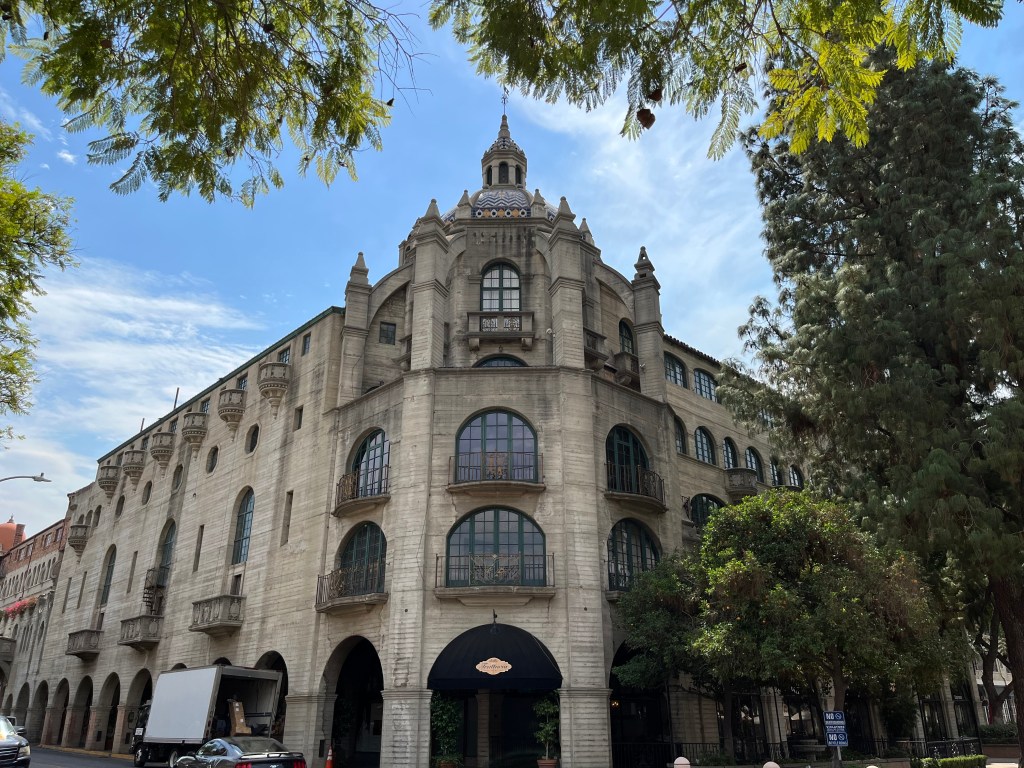
The result was a hotel unlike any other in the United States. Rooms and hallways were filled with artifacts and antiques Miller collected abroad: carved doors, stained glass windows rescued from European cathedrals, religious statuary, bells, paintings, and even a cross said to date back to the Spanish missions. The Mission Inn became a kind of architectural scrapbook–a deeply personal, highly theatrical monument to Miller’s romantic vision of history.
The Architects of the Mission Inn
While Miller was the visionary, he relied on a rotating cast of talented architects to bring his ideas to life–each contributing a different layer to the Mission Inn’s complex, ever-evolving style.
In 1902, he hired Arthur Burnett Benton, an architect well-versed in popular late-19th century styles such as Queen Anne, Shingle, and Arts and Crafts. But Benton had recently become intrigued with a new movement: Mission Revival. Part of this interest was fueled by his work restoring both Mission San Diego de Alcalá and Mission San Juan Capistrano, giving him firsthand experience with the aesthetics and structure of California’s historic missions.
That understanding shaped the design of the hotel’s first major expansion. Benton’s initial wing was subtle and grounded, made of brick and stone, with its most defining feature being a bell tower that rose above the entrance. The building’s rough textures and weathered appearance were intentional, meant to suggest age.
By 1910, Benton returned to design the Cloister Wing, a more refined and expressive space that included flying buttresses, rose windows, and a facade inspired by the Carmel Mission. Though rooted in Mission Revival, this phase introduced touches of Gothic and Moorish architecture, showing the beginning of the hotel’s stylistic expansion.
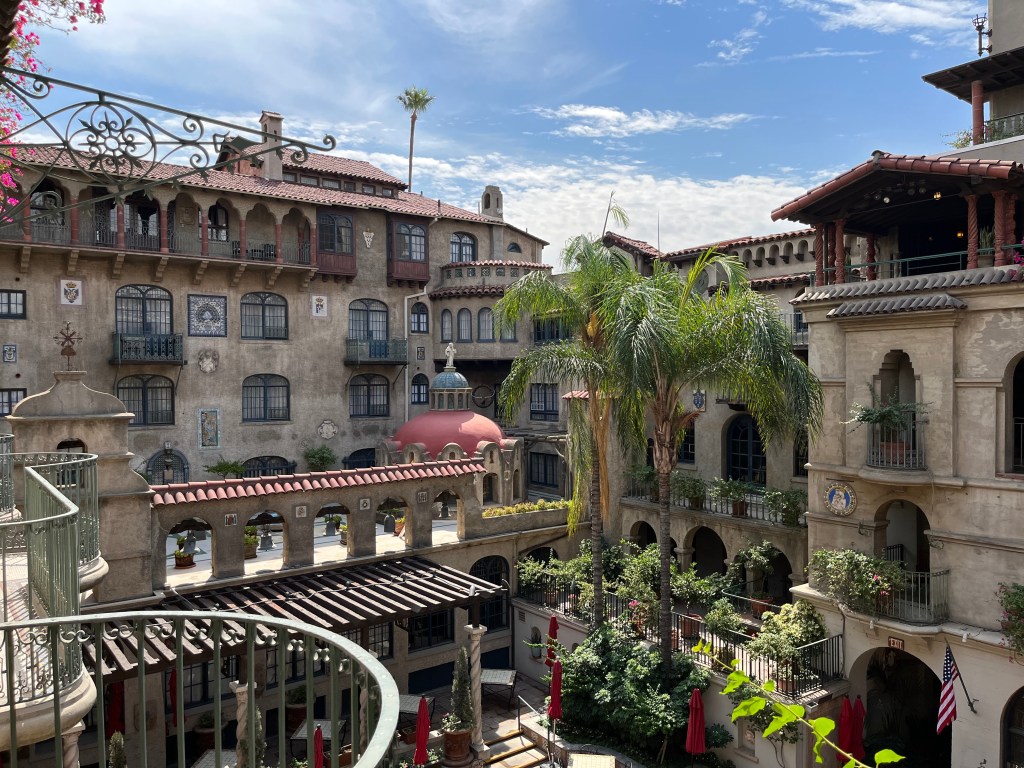
A few years later, Miller brought in architects Myron Hunt and Elmer Grey, best known for designing the Rose Bowl and the Huntington Library. Their contribution, the Spanish Wing, was one of the most celebrated additions to the hotel. Built of textured concrete rather than brick, the new wing featured a romantic courtyard and detailed ornamentation that shifted the tone of the hotel toward grandeur.
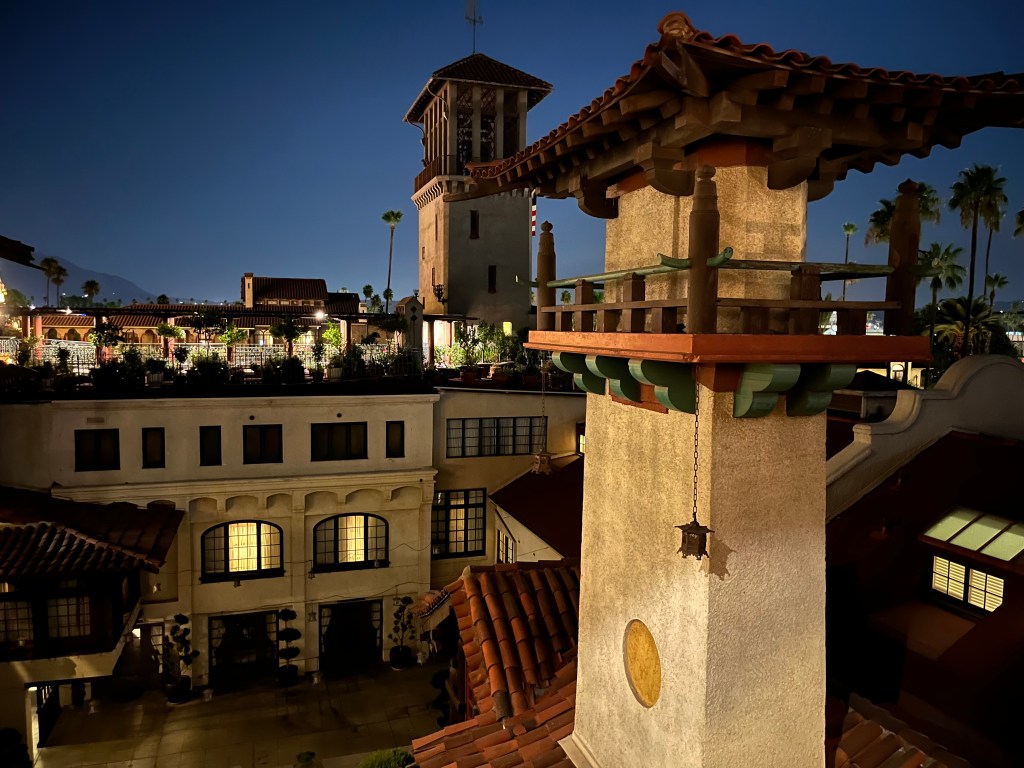
In the 1920s, inspired by travels through Asia, Miller introduced elements of Japanese architecture into the hotel. The creation of the Court of the Orient brought a pagoda-like tower and traditional kirizuma-style roofs into the mix–blending Eastern aesthetics into the otherwise Spanish and Mediterranean vocabulary of the hotel.
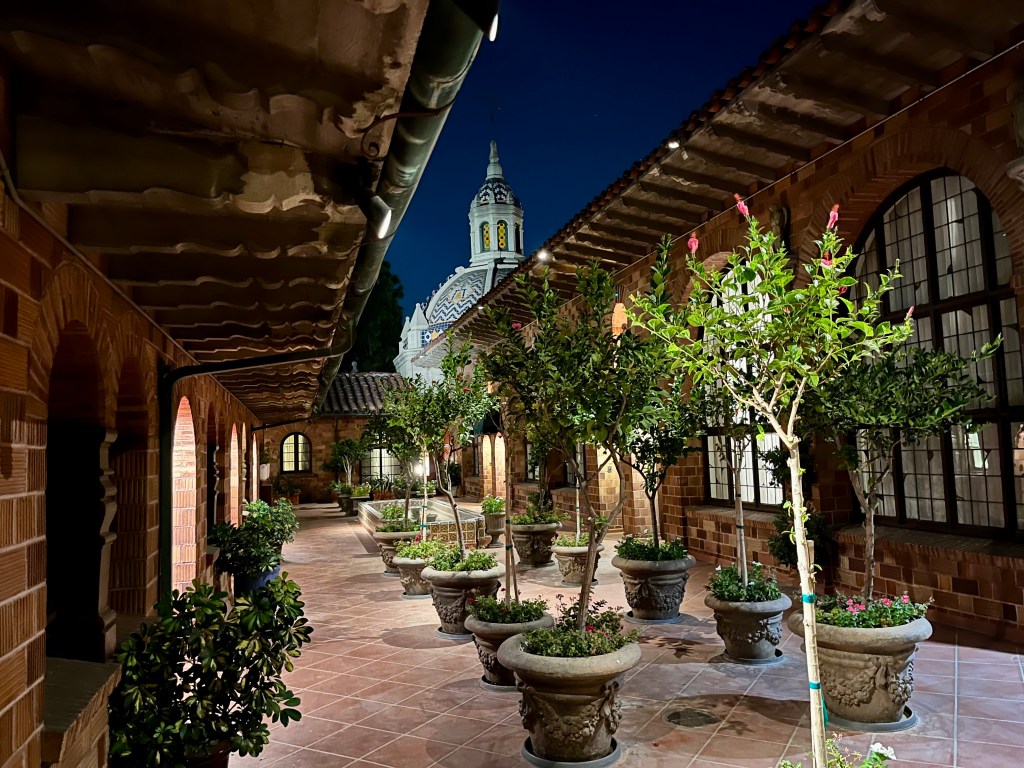
The largest and most dramatic expansion came in 1931, just before Miller’s death. Designed by George Stanley Wilson, this phase introduced a grand spiraling staircase, an elegant rotunda, and a beautiful rooftop patio–all executed with a theatrical flair that marked the peak of Miller’s architectural ambitions.
A Living Architectural Scrapbook
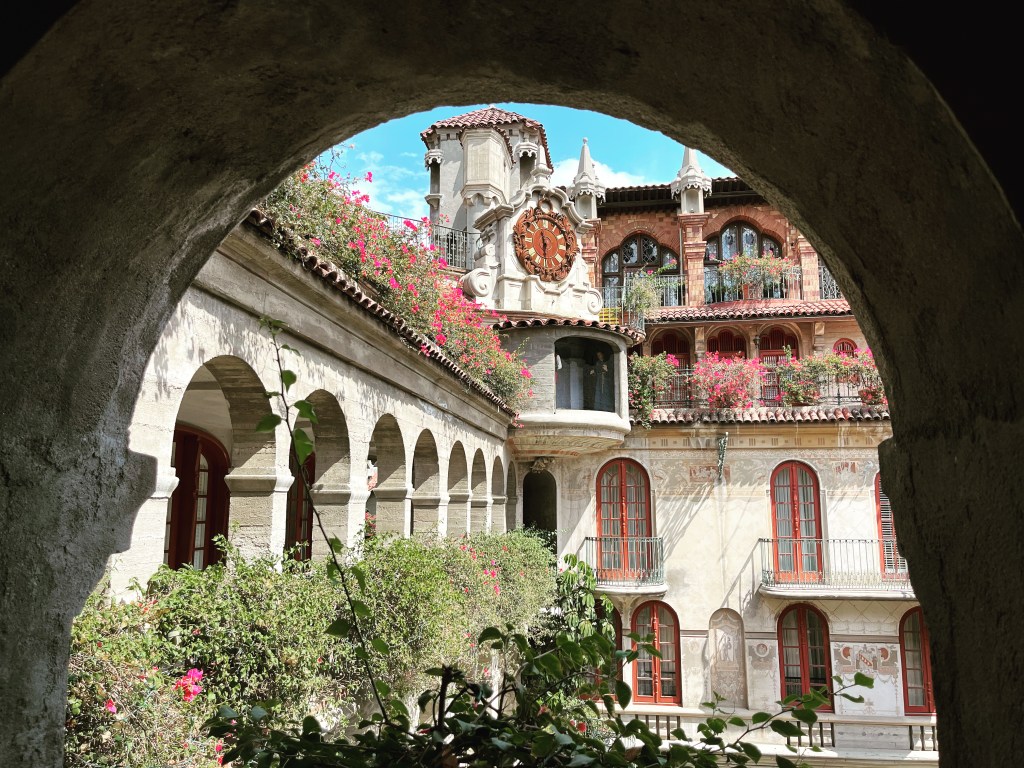
By the time Miller’s vision was fully realized, the Mission Inn had evolved far beyond Mission Revival. It had become something much more rare–a deeply personal, eccentric architectural collage–where California’s mission heritage met styles of Europe and Asia. When Miller died in 1935, the hotel continued to operate by his family. In the 1950s, the hotel began to decline. The situation had gotten worse despite the hotel being designated a National Historic Landmark in 1977. In the 1980s, there were calls to demolish it. Thankfully, the hotel was saved in 1992, reopening following a major renovation and restoration. Its luxurious interiors were restored, along with new amenities like upscale restaurants, a spa, and a bar honoring its rich history for hosting U.S. Presidents.
The Mission Inn is more than a beautiful place to stay–It captures a moment in time when California was inventing its architectural identity. it’s also a towering tribute to a man’s belief that architecture could tell a story.
Further Reading
- Historic Mission Inn by Friends of the Mission Inn
 All Things Architecture
Leave a comment