
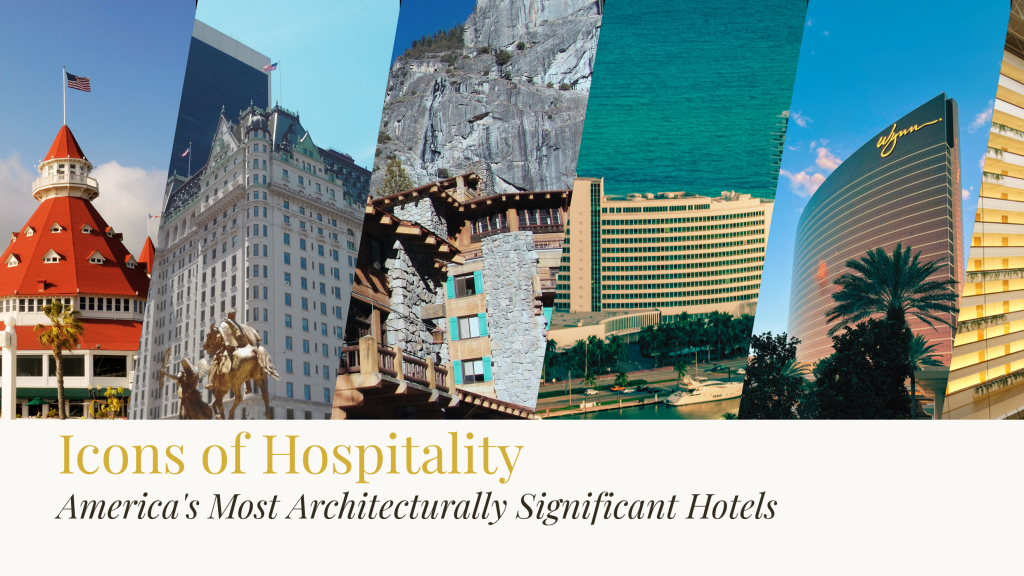
From the grand hotels of the Gilded Age to the modern luxury resorts of today, American hotel architecture has mirrored the nation’s evolving identity. These buildings aren’t just places to stay–they’re monuments to ambition, style, and innovation. Some introduced bold new forms; others entirely redefined how we experience leisure.
In this guide, we explore some of the most architecturally significant hotels in the United States–historic landmarks you can still check into today.
Hotel del Coronado (1888)
Architect: James and Merrit Reid | Style: Victorian

The Hotel del Coronado is one of the best-preserved wooden buildings in the country and a landmark of 19th-century resort architecture. With its iconic red-turreted roof, sprawling verandas, and idyllic beachfront setting, it helped shape the romantic ideal of the American seaside resort.
When it opened in 1888, it was the largest hotel in the world and the first to use electric lights powered by its own on-site power plant. Recently, the hotel underwent a dramatic renovation that restored its historic lobby and grounds to its original grandeur.
The Plaza Hotel (1907)
Architect: Henry Janeway Hardenbergh | Style: Beaux-Arts
Overlooking Central Park and Fifth Avenue, the Plaza isn’t just a hotel but an American institution. Built toward the end of the Gilded Age, its Beaux-Arts facade, lavish interiors, and opulent public spaces set a new benchmark for luxury hospitality.
It was one of the first hotels to blend the elegance of a European palace with the modern comforts of a rising metropolis. The Plaza became New York’s social hub, hosting dignitaries, celebrities, and literary icons. It also pioneered long-term luxury living, with private residences incorporated into its upper floors–a precursor to today’s branded residences.
The Ahwahnee Hotel (1927)
Architect: Gilbert Stanley Underwood | Style: National Park Service Rustic (Parkitecture)
Tucked into Yosemite Valley, the Ahwahnee Hotel blends wood, granite, and stained glass into an architectural tribute to its surroundings. It’s a cornerstone of “Parkitecture”–a style rooted in harmony with the landscape rather than dominance over it.
The Ahwanhee was designed to complement the awe-inspiring natural beauty around it, and its enduring influence can be seen in lodges throughout many national parks.
Fontainebleau Miami Beach (1954)
Architect: Morris Lapidus | Style: Miami Modern (MiMo)
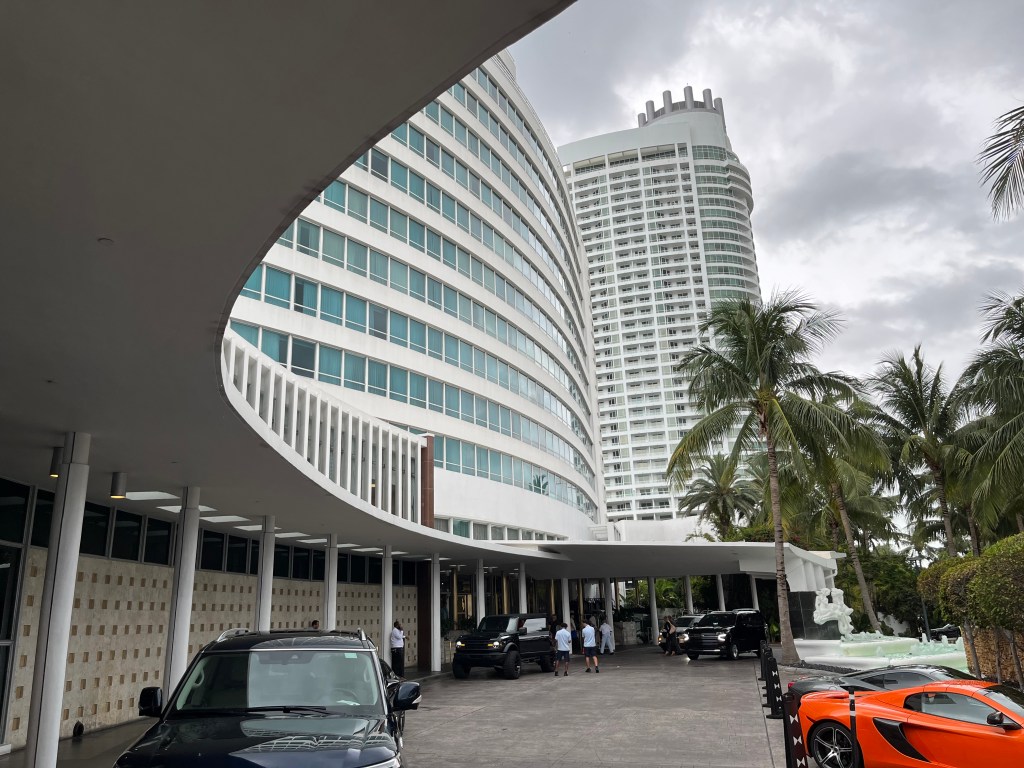
A visual feast of curves, color, and theatrical flair, the Fontainebleau transformed the concept of the hotel into a fully immersive resort. Lapidus’ bold, unapologetic design broke with modernist minimalism and leaned into spectacle–ushering in the era of the American mega resort.
It wasn’t just a place to sleep–it was a place to see and be seen, and its influence still echoes in resort design today.
Atlanta Hyatt Regency (1967)
Architect: John Portman | Style: Late Modernism
John Portman, both architect and developer, revolutionized hotel design when he introduced the world’s first true atrium hotel in downtown Atlanta. With a soaring internal volume and dramatic glass elevators, the Hyatt Regency reimagined what hotel space could feel like.
Portman captured the drama of the grand hotels of the past and projected it into the future. The hotel played a key role in revitalizing Atlanta’s downtown and inspired a wave of similar designs across the country.
Wynn Las Vegas (2005)
Architect: DeRuyter Butler | Style: Contemporary

At the dawn of the 21st century, Wynn Las Vegas and its sister property, Encore, brought a new era of sophistication on the Strip. Gone were the themed excess of the 1990s; in their place stood sleep bronze towers, lush interior gardens, and museum-quality art.
Inside, Roger Thomas’ interior design evokes the painterly worlds of Monet and Cézanne–layered, theatrical, and rich in materials. These resorts helped redefine luxury in Las Vegas and influenced a more refined direction for hospitality architecture worldwide.
Why These Hotels Matter
Across styles, regions, and centuries, these hotels each did something extraordinary: they turned architecture into experience.
Whether pioneering new construction techniques, creating immersive environments, or reflecting the drams of their eras, these hotels represent the evolution of American hospitality–and offer a night’s stay inside living history.
 All Things Architecture
Leave a comment