
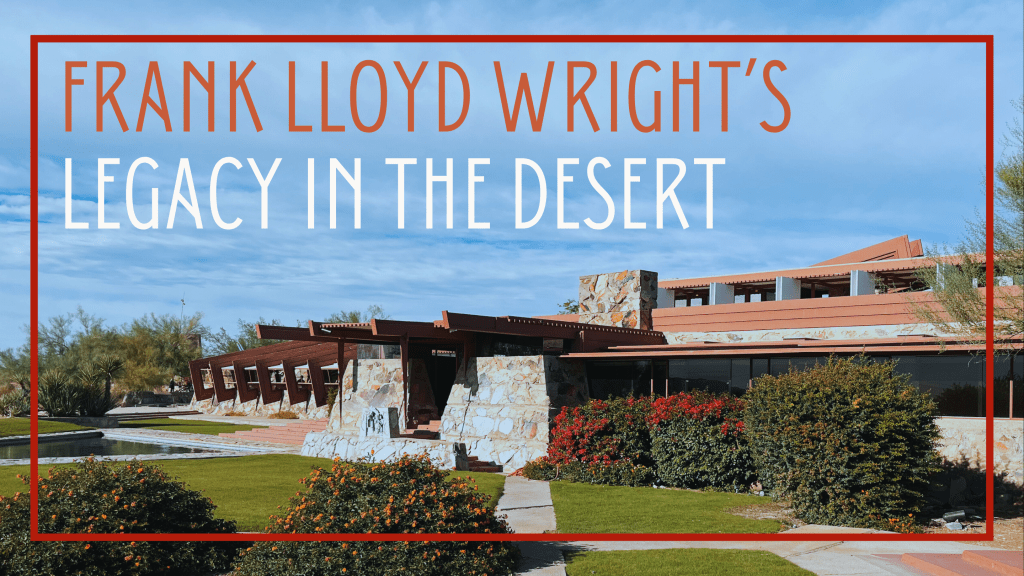
In the Arizona desert, architecture isn’t the first thing that comes to mind. Out here, nature dominates–no blueprints, just a canvas of time-sculpted earth and sky. And yet, nestled in this scorched landscape is the legacy of one of the greatest architects America has ever known: Frank Lloyd Wright.
Wright didn’t just build in Arizona. He studied it, lived it, and let it reshape his philosophy of organic architecture. If you’re looking to understand the deeper side of Wright’s work, Arizona isn’t a footnote–it’s a key chapter.
Frank Lloyd Wright’s Arizona Journey Begins at the Biltmore
Before Taliesin West or desert concrete, Wright’s first brush with Arizona came in 1929 at the construction site of the Arizona Biltmore Hotel in Phoenix. The resort’s low profile, earthy hues, and innovative textile blocks feel unmistakably Wrightian.
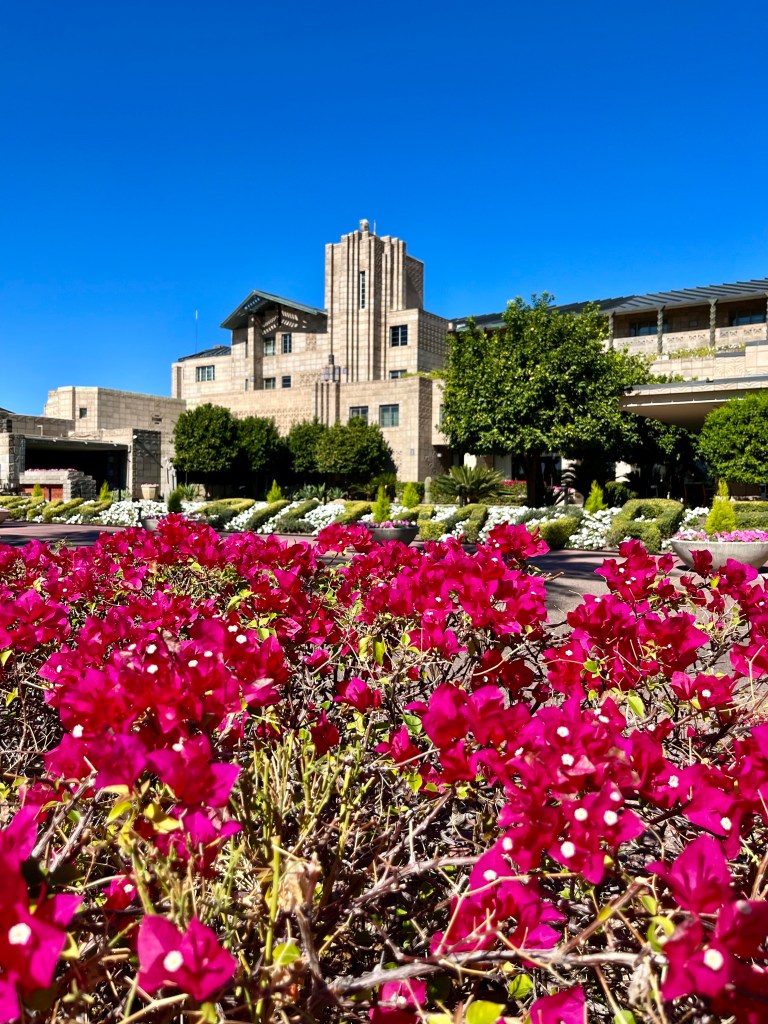
But here’s the twist: Wright wasn’t the lead architect. That titled belonged to Albert Chase McArthur, a former Wright apprentice. Wright consulted on the concrete block system, and his influence seeped into nearly every corner of the design. While Wright publicly credited McArthur in 1930, by the 1950s, he began claiming more ownership over the design–perhaps a result of legal drama during the hotel’s construction.
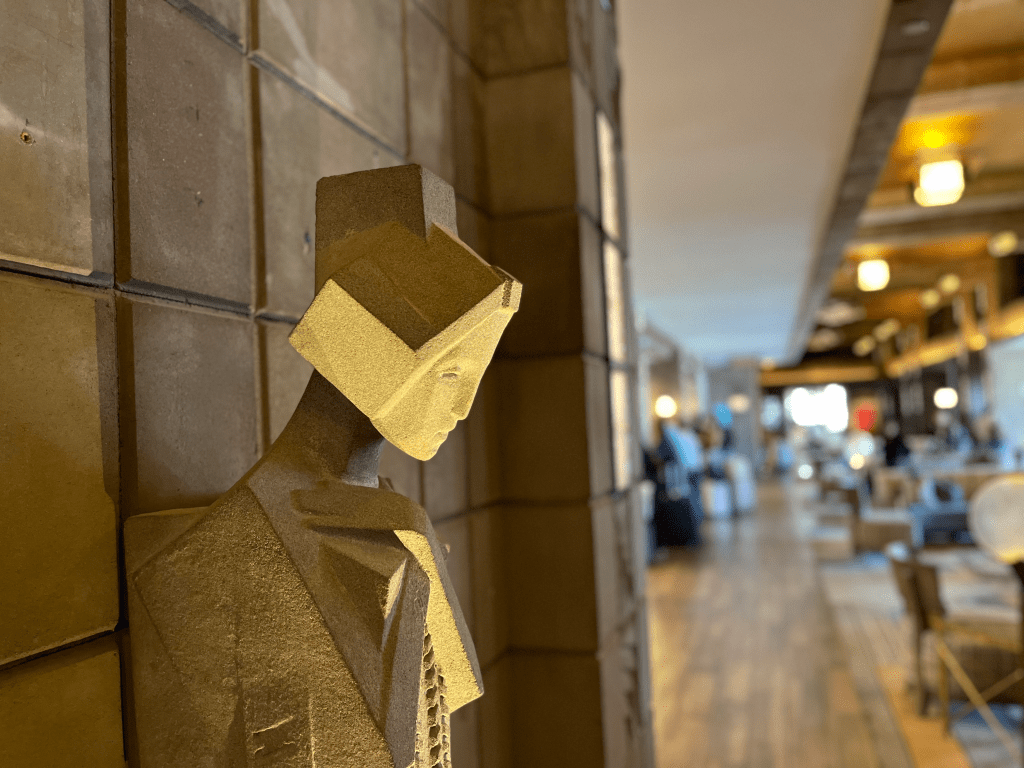
Regardless of who holds the credit, the Biltmore became Wright’s entry point to Arizona–and a launching pad for a deeper relationship with the desert.
Ocotillo Camp & the Lost San Marcos Project
After the Biltmore, Wright set up a temporary desert camp near Chandler, Arizona. The camp, known as Ocotillo, served as a creative base for the planned San Marcos in the Desert resort. With canvas roofs, wooden frames, and a design integrated into the hills, Ocotillo wasn’t just a shelter–it was a philosophy come to life.
Wright called it a “desert camp,” but it had the infrastructure of a fully functional design studio: drafting studio, guesthouses, kitchen, even electricity. But when the 1929 stock market crash hit, the project fell apart. Ocotillo was abandoned, its memory fading into modern suburbia.
Frank Lloyd Wright’s Phoenix Homes
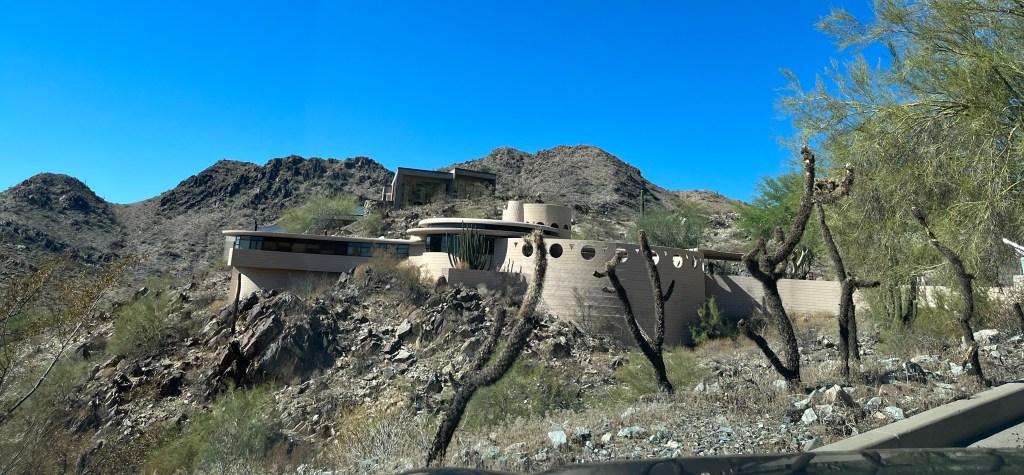
Across the Phoenix area, Wright’s residential legacy remains in scattered form. Like his other projects, these homes were designed to blend harmoniously with their environment.
- The David & Gladys Wright House: A spiraling concrete ramp that leads to a home elevated above the desert.
- The Lykes House: Curved walls and rounded volumes that feel like a geological formation rising from the hillside.
- The Boomers House, Raymond Carlson House, and Harold Price Sr. House: Each expresses Wright’s evolving design vision–glass walls, bold rooflines, and tactile materials.
Public Spaces: Gammage Auditorium & First Christian Church
In you want to experience Wright’s Arizona without trespassing, head to:
Gammage Auditorium at Arizona State University
Originally designed for a cultural center in Baghdad, the circular design was repurposed in Tempe after that project fell through. With its soaring colonnades and sweeping walkways, it was Wright’s final public building before his death in 1959. His apprentices competed it in 1964.
First Christian Church
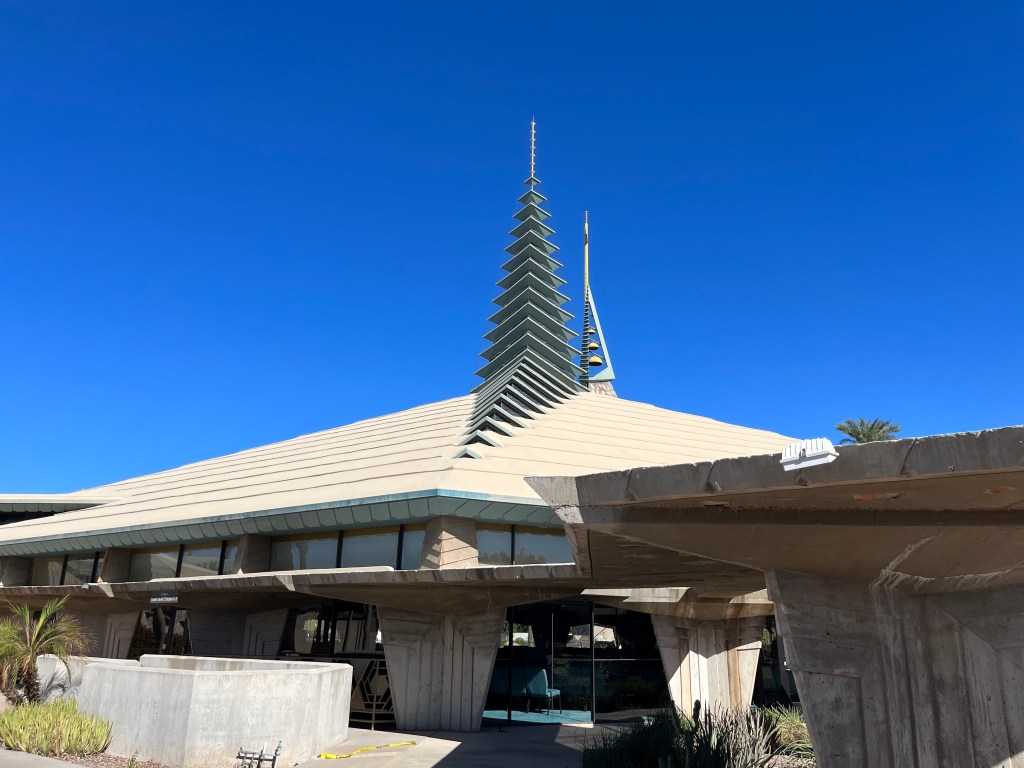
A lesser-known gem designed in 1950 but not built until 1970. The building rises like a piece of folded stone–spiritual, modern, and defiantly Wright.
Taliesin West: Frank Lloyd Wright’s Desert Masterpiece
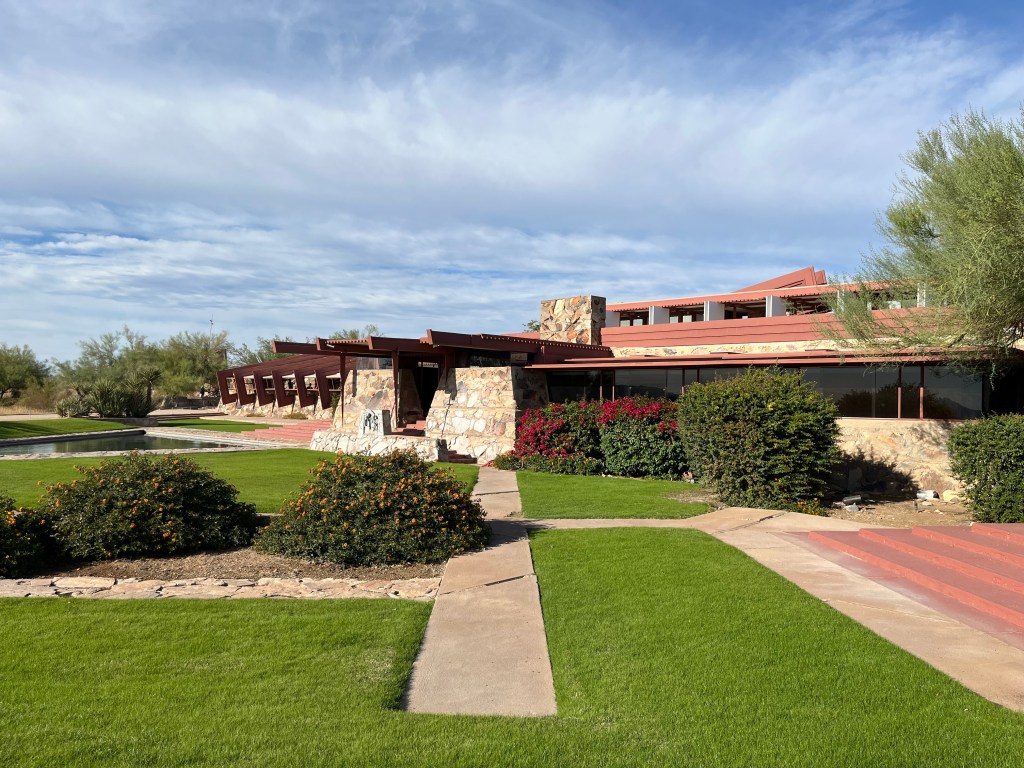
At the center of it all lies Taliesin West–Wright’s winter home, studio, and laboratory for organic architecture. Built in 1937 on 160 acres of desert near Scottsdale, this was not a retreat. It was a reinvention.
Here, architecture doesn’t resist nature–it surrenders to it.
- Redwood trusses stretch across the horizon
- Canvas ceilings defuse the desert light.
- Desert masonry–rocks sourced from the site–form walls that feel pulled form the Earth itself.
Walk the property and you’ll discover some hallmarks of Wright’s, like his famed compression and release. Tight passageways open into radiant great rooms. Floor-to-ceiling glass lets the landscape in. The drafting studio feels alive with past ideas. You can imagine the designs for the Guggenheim Museum or the Jacobs House being revised.
This is where Wright taught, designed, and led his Fellowship. It wasn’t just a place to live–it was an embodiment of belief.
What Arizona Taught Frank Lloyd Wright
Most stories say that Frank Lloyd Wright brought his vision to Arizona. But spend time among these buildings, and you realize something else: Arizona changed him.
The desert demanded humility. It required design that respected context, materials, and climate. In Wright’s later work, you see the desert’s lessons–boldness softened by restraint, ambition balanced by grounding.
For Wright, organic architecture wasn’t a style. It was a relationship–between the land, the light, and the life it shelters.
Plan Your Visit
- Taliesin West is open to the public via the Frank Lloyd Wright Foundation: Visit franklloydwright.org for more information.
- Arizona Biltmore Hotel offers guided history tours.
- Gammage Auditorium and First Christian Church may offer access for performances or visitors–check their respective websites for details.
Final Thoughts
Frank Lloyd Wright’s Arizona legacy isn’t just found in famous landmarks. It’s in the way his work adapts to its surroundings. It’s in the silence between buildings. It’s in the heat-baked stone, the filtered light, the long shadow of a desert evening.
If you really want to understand Frank Lloyd Wright–you have to come to Arizona.
 All Things Architecture
Leave a comment