
World’s fairs have long served as places where nations come together, showcasing their cultural achievements. Because of this blatant attempts at showmanship, the history of world’s fairs is filled with extravagant pavilions that broke new ground in architecture and design. Some of these experiments have become iconic structures known the world over. It’s a tradition that continues today with the recent opening of Expo 2025 in Osaka, Japan, which features one of the largest displays of mass timber construction, and unique expressions of forms. But let’s turn the calendar back and journey through the architectural legacy of the world’s fairs and their greatest achievements.
The Crystal Palace | Joseph Paxton | London, 1851

The Crystal Palace set the tone for the experimental nature of world’s fair architecture. Built in Hyde Park for the first modern world’s fair, it was a groundbreaking structure made of cast iron and glass. It was built using modular construction, which made for its rapid construction. Its construction marked a turning point in architecture, helping pave the way for early modernism that embraced industrial elements. Unfortunately, it was destroyed by fire in 1936, Nevertheless, its legacy lives on.
Eiffel Tower | Gustave Eiffel | Paris, 1889
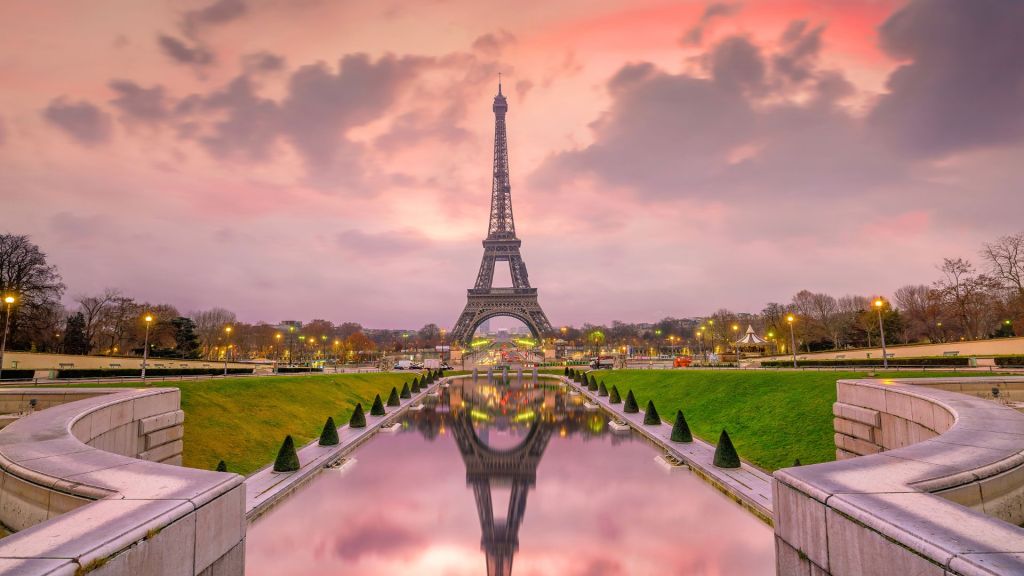
Though planned as a temporary structure, the Eiffel Tower has endured as one of the most recognizable structures in the world. It was a revolutionary structure at the time. It was the tallest structure in the world at the time, and dominated not only the surrounding fairgrounds but the entire city of Paris. Like the Crystal Palace, the Eiffel Tower showed the power of the industrial prowess of their host country.
1893 Columbian Exposition | Burnham & Root

American cities wouldn’t look the same without the 1893 Columbian Exposition. Its chief architect, Daniel Burnham, produced a master plan that brought all the grandeur of Europe to America. The gleaming white pavilions earned the fairgrounds the nickname of the “White City”. In the end, it helped inspire the City Beautiful movement that advocated for traditional architecture and grand boulevards throughout the first half of the twentieth century.
1915 Pan-Pacific Exposition | Bertram Goodhue

The 1915 Pan-Pacific Exposition in San Diego was meant to mark the competition of the Panama Canal, but what it’s probably best known for today is heralding in the popularization of a style called Spanish Colonial to America. To link California’s historical past as a Spanish colony, the fair’s head architects, Bertram Goodhue and Carleton Winslow, designed a fairground that took inspiration from Spanish colonial architecture. Traditionally, the style blends Moorish, Baroque, and Renaissance elements together. In the end, the fairgrounds captured the romance and charm of Spain, inspiring others to design in the style, especially in Southern California. In the end, the original architecture helped establish San Diego’s Balboa Park as one of the top city parks in the world.
The Barcelona Pavilion | Ludwig Mies van der Rohe | Spain, 1928
In what was designed to show the new artistic prowess of a new Germany following WWI, the Barcelona Pavilion was Mies’ built embodiment of his mantra “less is more.” The pavilion featured walls of glass and stone enclosing an open space for gathering. It helped make modernism mainstream, and established Mies as one of its founders. The pavilion was also the introduction to the Barcelona Chairs.
Trylon & Perisphere | Wallace Harrison & J. André Fouilhoux | New York, 1939
These two futuristic structures represented the fair’s theme of the world of tomorrow. The Trylon was a tall spire standing 600 feet in the air, while the Perisphere featured a cavernous interior displaying a peaceful, utopian city called Democracity. Unfortunately, following the 1939 World’s Fair, the two icons were demolished and sent to the scrap yard where the steel would be turned into military machinery for the Allies’ effort in WWII. Beyond that, they were two of the largest examples of modernist architecture at the time.
Habitat 67 | Moshe Safdie | Montreal, 1967
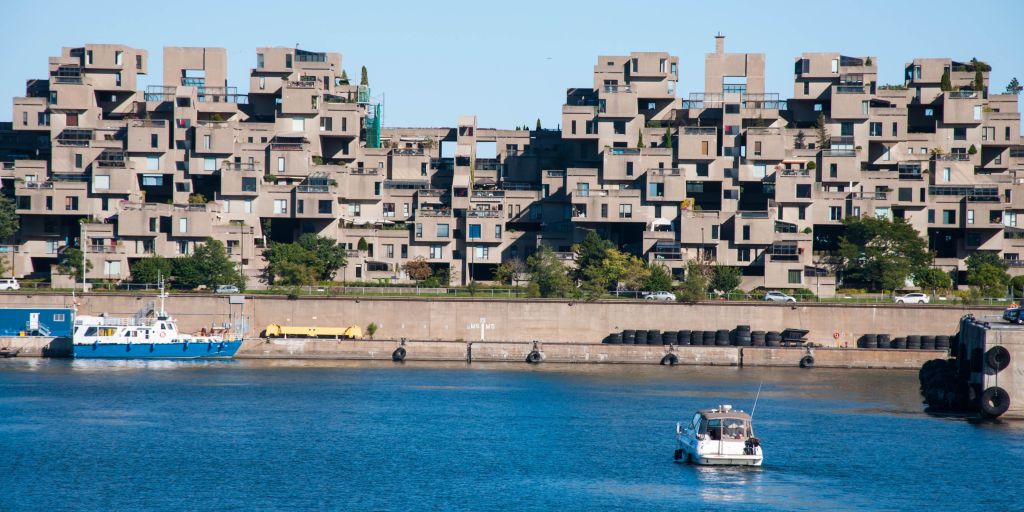
This experimental housing complex was one of the landmarks of Expo 67 and was a radical rethinking of urban living. Composed of interlocking concrete modules, Habitat 67 merged the benefits of suburban housing with the density of an urban living. It was an immediate hit with thousands wanting to rent an apartment. It also spurred plans for other Habitat communities around the world, including one that was partially built in Puerto Rico. It wouldn’t be until the 2010s that Safdie was able to build another version of his Habitat concept in China. The original Habitat remains a celebrated icon of brutalist and modular construction.
World’s fairs have served as architectural laboratories, places where avant-garde ideas could be built and tested at full scale. From glass palace to modular homes, these events have charted the evolution of architecture across now centuries. Whether still standing or remembered through photos and plans, the buildings of world’s fairs continue to inspire architects around the world.
Further Reading
15 Amazing Structures Originally Built for World’s Fairs | CN Traveler
 All Things Architecture
Leave a comment